Cookline exteriors
Fryers, flat tops, ranges, charbroilers, ovens, and hot holding units cleaned for grease removal, edge detailing, and a consistent stainless finish.
Serving McKinney, Collin County, Texas & surrounding areas
Mon–Fri 8am–6pm · Sat 9am–2pm
Keep your kitchen inspection-ready with detailed, scheduled cleaning for the equipment that drives service: cooklines, prep areas, coolers, and the hard-to-reach spots where grease and grime build up.
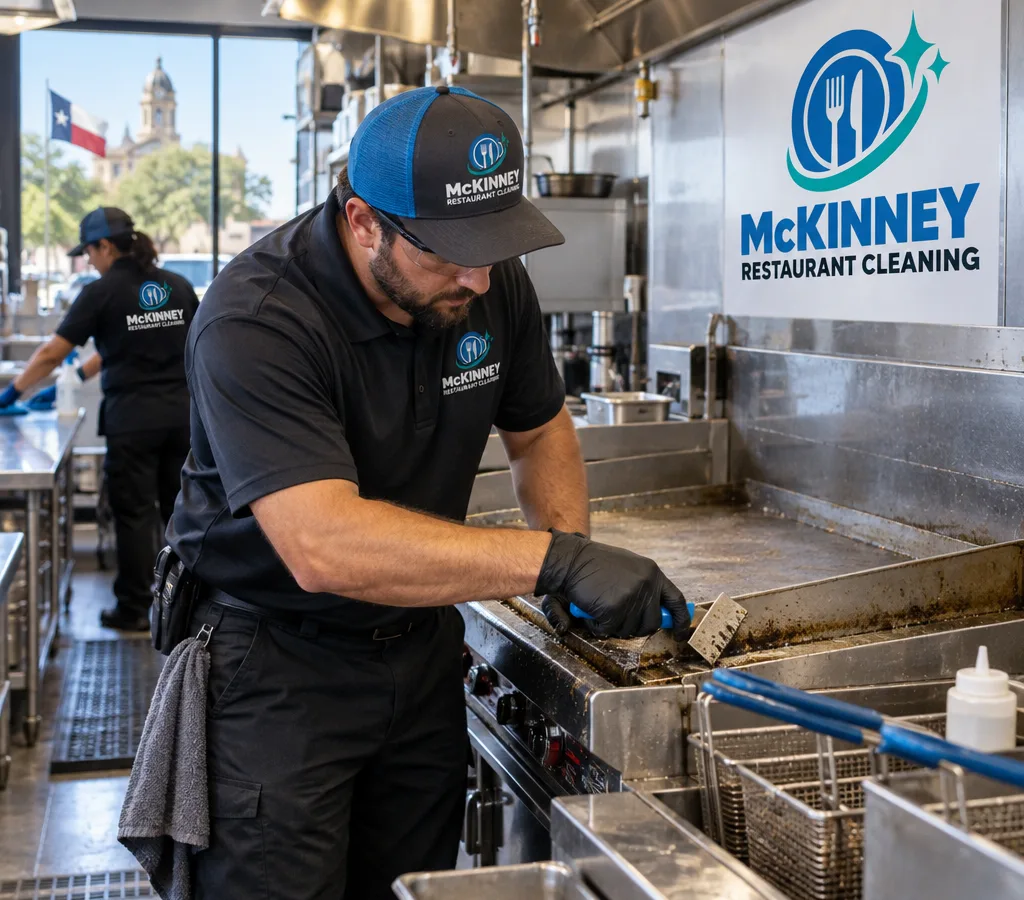
Restaurant Equipment Cleaning Prosper is focused, hands-on work: removing grease, carbon, food residue, and grime from the surfaces that impact food safety, equipment performance, and inspection outcomes. It is also one of the fastest ways to improve how a kitchen runs because buildup shows up first as slow starts, uneven heat, lingering odors, and surfaces that never look fully clean.
Our work typically centers on the cookline and the places around it that collect the most soil: fryer banks, flat tops, ranges, charbroilers, ovens, warmers, microwave exteriors, and the surrounding stainless. We also spend time where daily wipe-downs usually miss, like equipment sides and backs, toe-kicks, seams, corners, casters, shelving, and the edges where grease migrates.
For Restaurant Cleaning Prosper accounts, equipment cleaning is often the difference between a kitchen that looks “pretty good” and one that looks professionally maintained when the lights are bright and doors are open. If you want broader support beyond equipment, McKinney Restaurant Cleaning also provides professional restaurant cleaning that can be scheduled around service so the whole back-of-house stays consistent.
Kitchen equipment cleaning needs to be thorough, but it also has to fit real service schedules. We coordinate access, focus on the equipment you prioritize first, and work in a way that respects your team and your space.
Typical approach:
If your needs include grease-laden exhaust components, that is usually handled as a separate, code-driven scope with different methods and documentation. We can discuss what you have on-site and build the right plan.
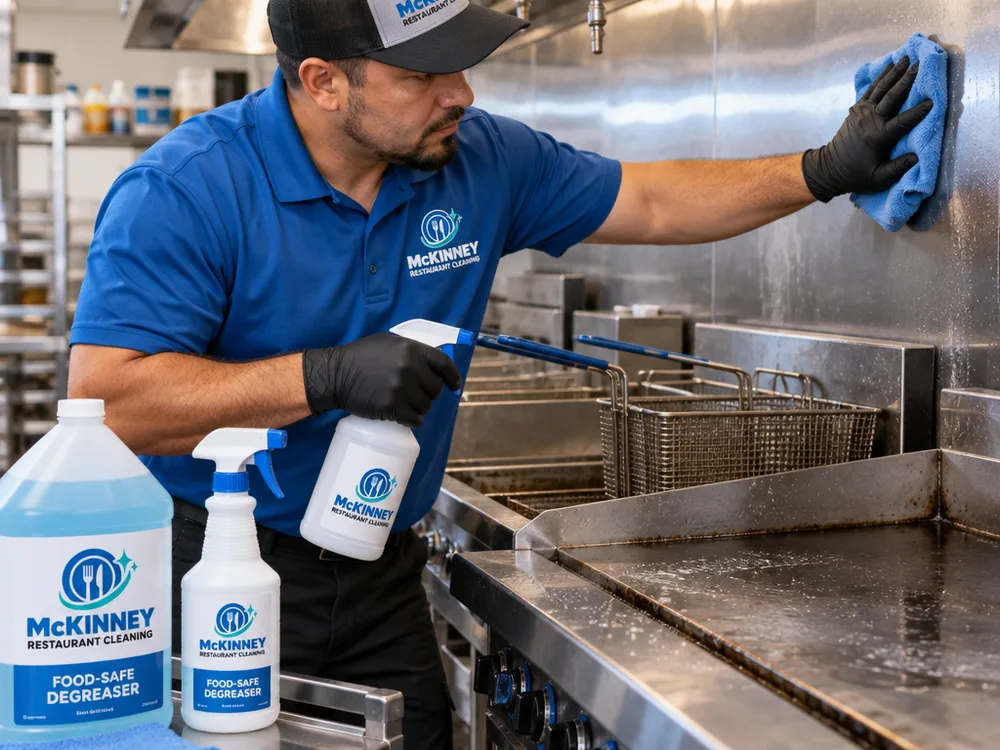
Fryers, flat tops, ranges, charbroilers, ovens, and hot holding units cleaned for grease removal, edge detailing, and a consistent stainless finish.
Prep tables, slicers (exterior cleaning only unless disassembled by your staff per manufacturer guidance), mixers (exteriors), and counters where residue collects in seams and corners.
Door fronts, handles, gaskets (wipe-down and grime removal), and exterior panels that pick up fingerprints, splash, and grease drift from the line.
Sinks, undershelves, speed racks, and wall areas behind equipment where splatter and grease tend to build over weeks.
Sides and backs of equipment, caster areas, toe-kicks, and the low spots where grease settles and attracts dust and debris.
Prosper-area restaurants often balance high expectations from guests with the realities of fast growth and busy weekends. That usually means tight turn windows for deep cleaning and a need for consistent results across multiple shifts.
We see a few patterns that matter for Restaurant Equipment Cleaning Prosper work:
When guests can see into the kitchen, stainless and high-touch equipment fronts need more frequent detailing.
Grease and carbon build faster when the line runs hard. Planning for a deeper equipment clean on a predictable cadence keeps buildup from turning into a shutdown-level job.
Many kitchens rely on the same units for multiple dayparts. That increases the need for targeted cleaning in the right places—splash zones, corners, and controls—so equipment stays presentable and easier to wipe down daily.
Whether you run a single location or manage multiple units, the goal is the same: a repeatable scope your team can count on. Tell us what equipment you have, what keeps failing inspections or slowing your crews down, and we will recommend a schedule that fits service.
Step 1 of 4
We identify the equipment list, priority problem areas, access constraints, and preferred service window. You get a clear scope so expectations match what is on the floor.
Step 2 of 4
We pre-treat heavy grease and carbon, then scrub and scrape where buildup is thickest. We focus on safe methods for stainless and painted surfaces.
Step 3 of 4
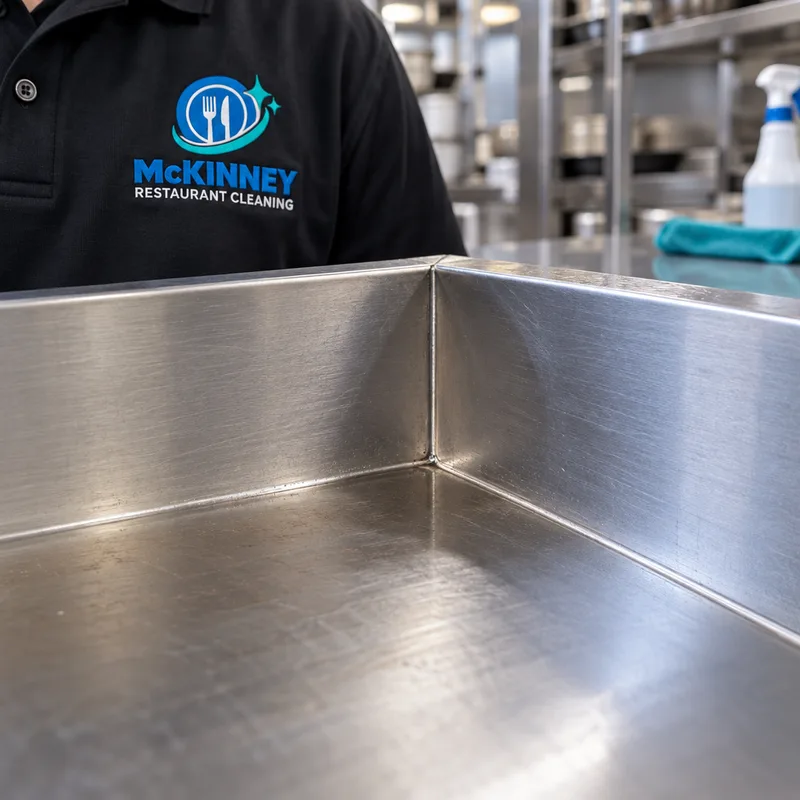
We detail seams, corners, handles, and equipment sides so the result looks consistent, not spot-cleaned.
Step 4 of 4
We remove residue, wipe surrounding surfaces that picked up splash during cleaning, and leave the line ready for your next shift.
Restaurant equipment cleaning in Prosper typically ranges from about $250 to $900+ per visit, depending on how many pieces are included and how heavy the grease and carbon buildup is. A smaller scope (a few cookline exteriors and stainless detailing) often lands at the lower end, while a full cookline plus surrounding stainless and hard-to-reach areas prices higher.
Final pricing depends on equipment count, condition, access (tight lines vs. movable units), required protections, and whether service is after-hours. The exact cost is confirmed after a quick walk-through and a written scope for your kitchen.
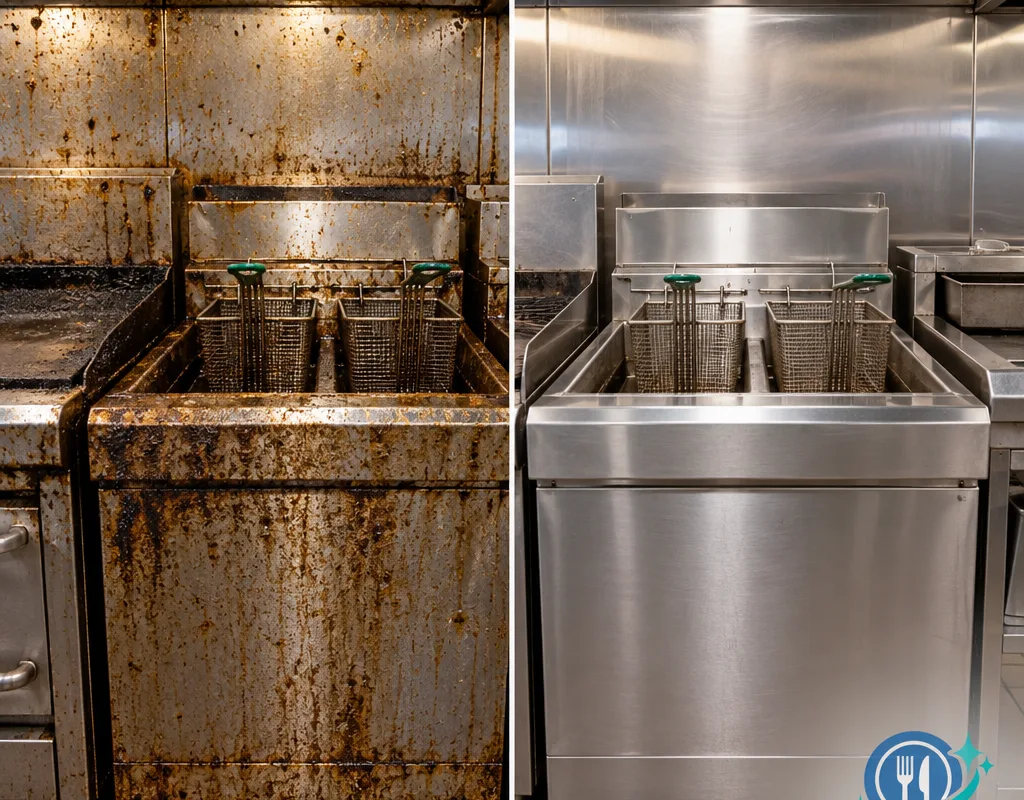
Most kitchens benefit from a scheduled deep clean monthly or quarterly, with frequency driven by volume and menu type. High-grease menus and heavy weekend service usually need shorter intervals because carbon and grease harden quickly on flat tops, fryer exteriors, and backsplash areas.
Yes, equipment cleaning is often scheduled after close or during low-traffic hours so your team can keep service moving. When we plan the scope around your real prep and closing routine, it reduces downtime and keeps the cookline organized for the next shift.
We can clean behind and beside equipment when it is safe to do so and access is available. Some units are easy to roll out on casters, while others need your team to disconnect utilities or approve movement; we confirm access during the walk-through and build that into the scope.
Equipment cleaning supports inspection readiness by removing grease, residue, and buildup in the places inspectors notice quickly: splash zones, handles, seams, and the floor line around the cookline. The best results come from pairing professional deep cleaning with a practical daily wipe-down plan for your staff.
We typically need a point of contact on-site, access to the areas being cleaned, and confirmation of any movement limits for equipment. If certain units cannot be moved or cannot be cleaned internally due to manufacturer guidance, we plan around that and focus on the exterior and surrounding soil areas.
We use commercial products appropriate for kitchen environments and focus this service on equipment exteriors, stainless, and surrounding areas where grease and grime accumulate. For true food-contact surfaces and disassembly cleaning, we coordinate with your team and follow manufacturer and operational requirements.
Tell us what equipment you want cleaned and when you need access. We will recommend a practical schedule and provide a written scope so your team knows exactly what to expect.