Floor cleaning service · McKinney

Commercial Kitchen Floor Cleaning

Cut through grease build-up, restore grout lines, and improve traction in high-traffic back-of-house areas with a plan that works around your service hours in McKinney.

✓Written cleaning scope ✓Mechanical tile scrubbing ✓Service-hour planning
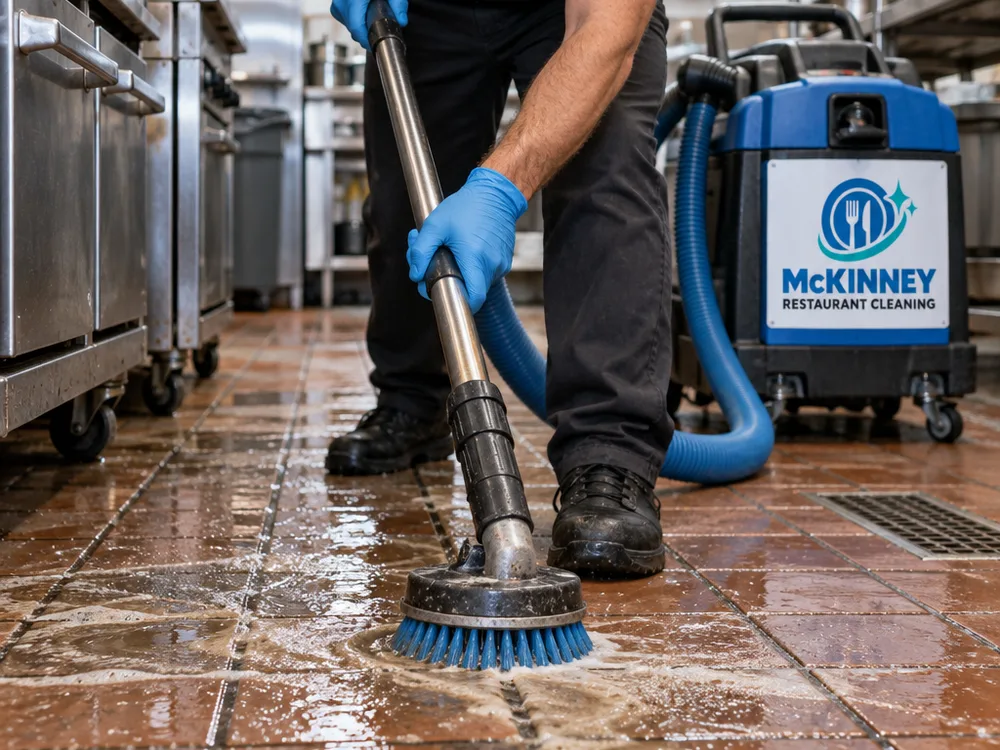
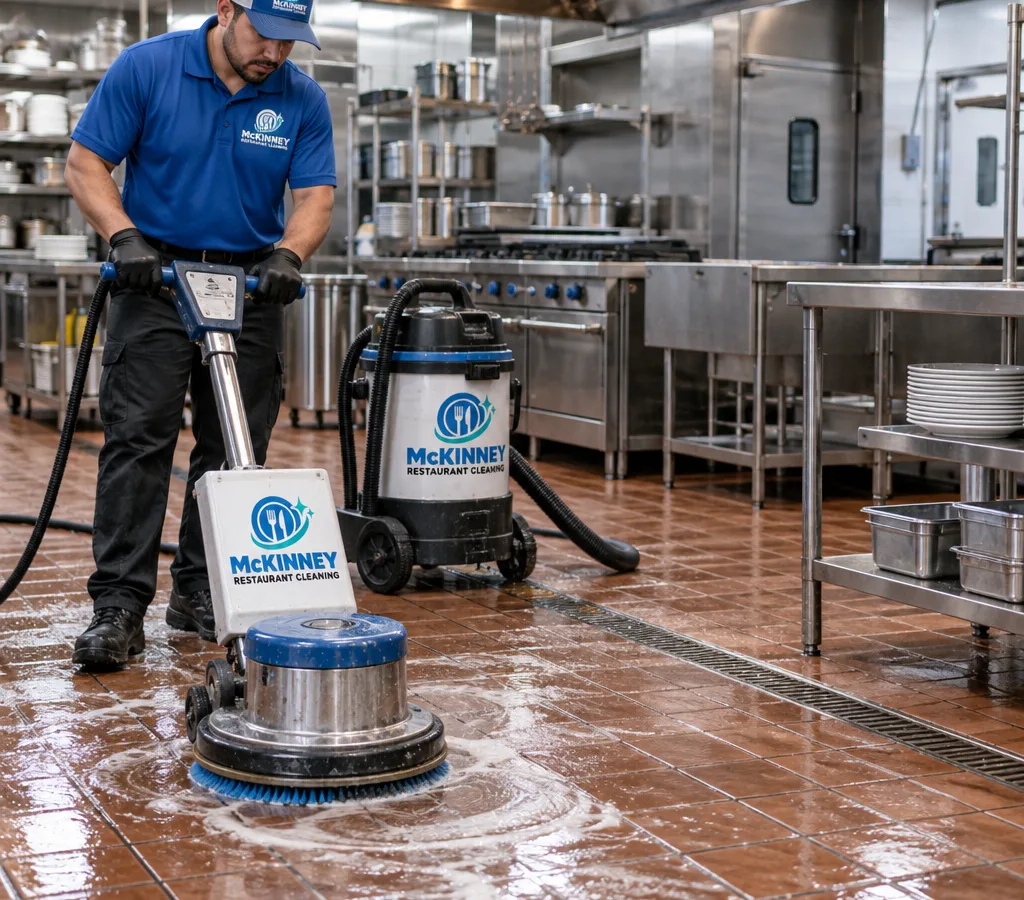
Technician scrubbing a commercial kitchen tile floor with a rotary floor machine and wet vacuum nearby
Built for back-of-house floors

Tile-and-grout floor cleaning built for restaurant kitchens

Restaurant kitchen floors fail in predictable ways: cooking oils migrate into grout pores, tracked-in dirt binds to degreaser residue, and wet areas turn slick at exactly the worst times. Commercial Kitchen Floor Cleaning focuses on removing embedded soils from tile texture and grout joints, then recovering the slurry so it does not get pushed into corners, coves, and under equipment.

McKinney Restaurant Cleaning provides Restaurant Floor Cleaning Services for back-of-house tile and grout where mops cannot keep up. If your crew is stuck doing repeated passes with hot water and still seeing gray grout lines, tacky film, or slippery spots, the floor typically needs mechanical agitation and proper extraction, not another round of soap.

You will get a clear scope for what is being cleaned—kitchen line, prep, dish, walkways, and entry transitions—what products are used, and what needs access. That helps you plan around deliveries, shifts, and any equipment that must be moved safely.

Request a Callback
Floor-cleaning standards

What to expect from our commercial floor cleaning in McKinney

✓

Kitchen floor degreasing that targets the problem areas

We treat the zones that load up first: fry station lanes, cook line edges, dish landing areas, and traffic paths to the walk-in. The goal is to break up oil in grout pores so it can be lifted out, not spread around.

✓

Restaurant tile cleaning with mechanical scrubbing

Textured quarry tile and many anti-slip tiles hold soil in the surface profile. We use commercial-grade agitation, commonly a rotary scrubber with the right brush or pad, to reach where string mops cannot.

✓

Restaurant grout cleaning with controlled rinse and recovery

After dwell time and agitation, we rinse and recover the dirty solution so it is removed from the building. This reduces re-depositing grime into grout lines and base edges.

✓

Safer traction in wet, high-traffic areas

Grease film can make a floor feel slick even when it looks clean. Removing that film helps the floor perform as intended, especially near sinks, dish stations, and dining-room entrances.

✓

Scheduling that respects service hours

Commercial kitchens run on tight timelines. We plan work so floors can dry and your team can get back to prep and close-out without bottlenecks.

✓

A documented scope you can hand to management

Standardize expectations across locations or shifts with a written scope covering included areas, access needs, and limitations such as fixed equipment that cannot be moved.

Request a Callback
Degrease, agitate, recover

How restaurant floor degreasing works (and why mopping stops working)

Restaurant Floor Degreasing is different from routine cleaning because the soil is different. Animal fats and cooking oils are hydrophobic. They bond to grout, textured tile, and the micro-scratches that build up over time. A mop can dilute and move that film, but it rarely removes it from pores and joints.

A typical Commercial Kitchen Floor Cleaning visit includes:

  • Pre-inspection: We check tile type, grout condition, sticky film, dark joints, and slip-prone areas.
  • Degreaser application: Kitchen soil is treated with suitable commercial chemistry and enough dwell time to break its bond.
  • Mechanical scrubbing: Agitation lifts soil from grout joints and the tile’s textured surface.
  • Rinse and recovery: Contaminated solution is removed rather than pushed toward edges.
  • Detail work: Thresholds, corners, and areas around floor sinks receive focused attention.

If your kitchen has quarry tile, grout haze, or older joints that stay dark even after cleaning, we will tell you what can realistically improve with cleaning and what is likely permanent staining or wear.

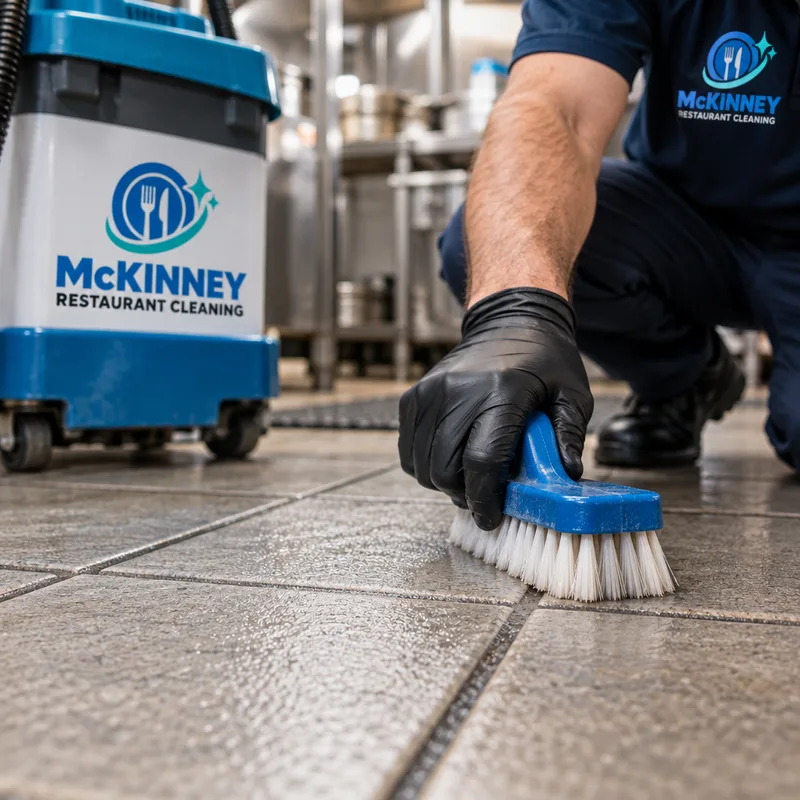
Brush head agitating a greasy grout line on a wet restaurant kitchen tile floor during extraction
From walk-through to dry-out

Our process for Restaurant Floor Cleaning in McKinney

Request a Callback
  1. Step 1 of 5

    Walk-through and scope confirmation

    We confirm the areas to be cleaned, access points, and constraints including fixed equipment, tight corridors, and delivery windows. Any specific safety requirements are aligned before work starts.

  2. Step 2 of 5

    Protect, pre-treat, and stage the area

    We stage tools and caution markers, then pre-treat heavy grease zones. Entry transitions and high-visibility areas receive extra attention for consistent results.

  3. Step 3 of 5

    Scrub tile and grout with the right tool for the floor

    We choose brushes or pads based on the tile surface and grout condition, lifting embedded soil without damaging the floor or leaving residue that attracts new dirt.

  4. Step 4 of 5

    Rinse and recover

    We rinse thoroughly and recover the slurry so it is not left in joints, corners, or under edges. This separates a deep clean from a surface-level scrub.

  5. Step 5 of 5

    Final detail and dry-out plan

    We detail edges, corners, and floor-sink areas, then confirm dry-time expectations so staff knows when the floor is ready for traffic and mats.

Planning your scope

How Much Does Commercial Kitchen Floor Cleaning Cost in McKinney?

Commercial Kitchen Floor Cleaning in McKinney typically ranges from about $0.35 to $0.85 per square foot, with most restaurant kitchens landing in the $250 to $900 range per visit depending on layout and soil load. Smaller dish or prep areas can price at the low end, while larger back-of-house footprints or heavy grease buildup price higher.

Your final price depends on square footage, tile and grout type, how embedded the grease is, access and staging time, whether equipment must be worked around, and how much detail work is needed at edges and thresholds. Exact pricing is confirmed after a quick on-site walk-through and scope check.

Request a Callback
Typical focus areas

Commercial kitchen tile and grout cleaning results (typical focus areas)

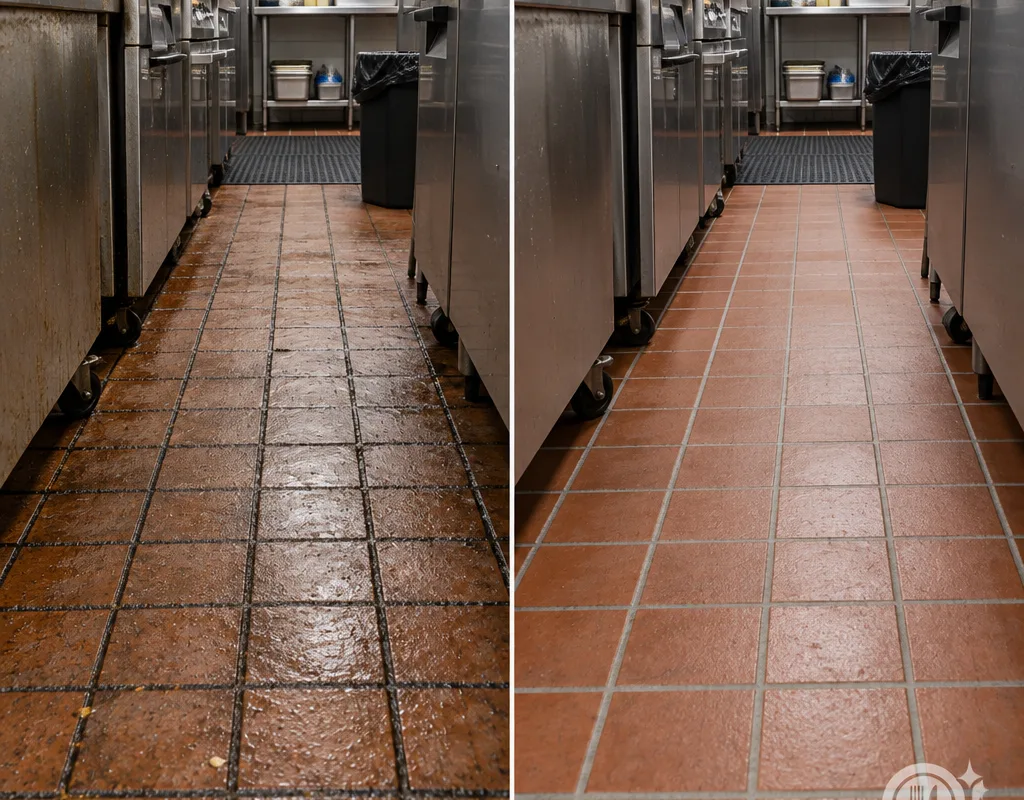
Before-and-after comparison of greasy and cleaned quarry tile along a fry station traffic lane
Fry line traffic lanes tend to hold the heaviest grease in grout joints.
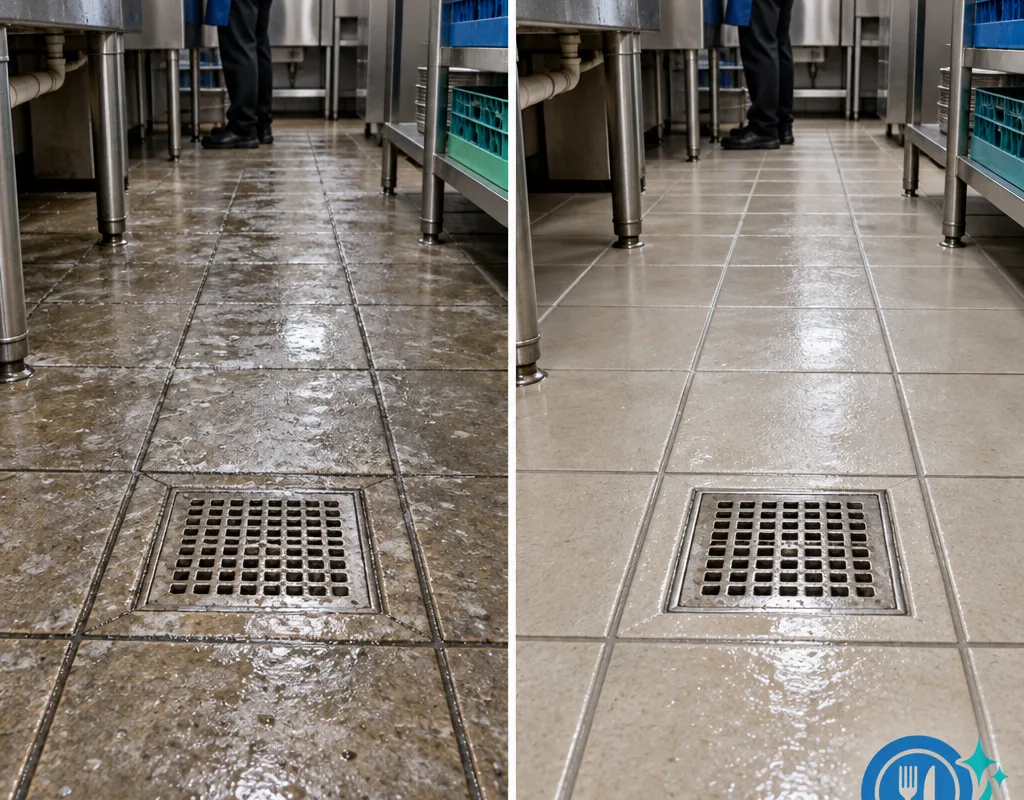
Before-and-after comparison of dish-area tile and grout near a restaurant floor sink
Dish areas often need extra rinse and recovery to remove residues.
Close-up of cleaned grout lines and textured restaurant kitchen tile without glossy residue
Deep cleaning aims for clean texture and joints, not a slippery finish.

If your back-of-house tile stays dark or slippery even after nightly mopping, ask for a written scope for restaurant tile and grout cleaning and a schedule that fits your operating hours.

Call for a Free Quote
Answers before scheduling

Commercial kitchen floor cleaning FAQs

How long does restaurant tile and grout cleaning take?

Most Restaurant Tile Cleaning and grout scrubbing for a typical back-of-house area takes a few hours, with time driven by square footage, soil load, and detail work at edges, thresholds, and sinks. During the walk-through we can usually provide a realistic window based on your kitchen layout and access.

Can you clean quarry tile floors in restaurant kitchens?

Yes, quarry tile is a common surface for Commercial Kitchen Floor Cleaning and usually responds well to degreasing plus mechanical scrubbing because its texture holds soil. The key is matching chemistry and brush selection to the floor, then fully rinsing and recovering the loosened grease.

Will grout lines turn back to their original color?

Grout often lightens significantly when the dark color is mainly grease and embedded soil, but permanent staining and wear can limit how far it can return. We identify areas that appear to have surface buildup versus staining or erosion during the initial inspection.

Do you use high-pressure washing on kitchen floors?

In many indoor restaurant kitchens, controlled low-pressure rinsing with strong recovery is safer because it reduces overspray and keeps dirty water from being driven into coves and seams. Where pressure is appropriate, it still requires containment and extraction so slurry is removed rather than redistributed.

What should my staff do before a commercial floor cleaning appointment?

Clear loose items, lift floor mats, and identify any equipment that cannot be moved or shut down. Staging the space after close or before prep ramps up speeds up Restaurant Floor Cleaning Services and helps floors dry faster for normal traffic.

How often should a restaurant schedule kitchen floor degreasing?

Most kitchens benefit from periodic Kitchen Floor Degreasing on a cadence tied to volume and cooking style, not simply the calendar. High-grease operations and heavy traffic typically need more frequent deep cleaning than low-grease prep kitchens.

Do you offer other restaurant cleaning in McKinney besides floors?

Yes. Many operators coordinate floor work with other recurring restaurant cleaning needs so the schedule makes sense for the operation without stacking too many disruptions into one shift.

Get a clear scope for commercial kitchen floor cleaning

Tell us what areas you need cleaned—cook line, dish, prep, or walkways—and when you can provide access. McKinney Restaurant Cleaning will confirm the floor type, level of degreasing needed, and a schedule that fits your service hours at 414 Metro Park Dr, Suite 5, McKinney, TX 75071 and nearby.